Marcus Coleman Fifty Years Over Fire
Launch promo ends in 00:00:00
Get the Book — $47 $27
Marcus Coleman — Fifty Years Over Fire, South London

A Barbecue Season Costs About £663. Done This Way It Costs £334.

Fifty years over fire, written down — the whole craft from the chimney starter to the six-hour shoulder, plus the ten spices that build every rub and sauce worth making. Every method carries a materials list, a real price in pounds, and an honest account of where it fails.

Instant download · Yours forever

45Chapters
148Pages
£330Season Audit, Ch. 38
Marcus Coleman at the grill

“You do not cook over flames. You cook over heat. Everything good about barbecue happens over settled coals with no flame on them at all.”

— Marcus Coleman, Chapter One
Section I — The Book

A working manual, not a coffee-table book

There are no photographs of food you will never make. Every method has a materials list, a real price in pounds, and an honest account of what it does and does not do.

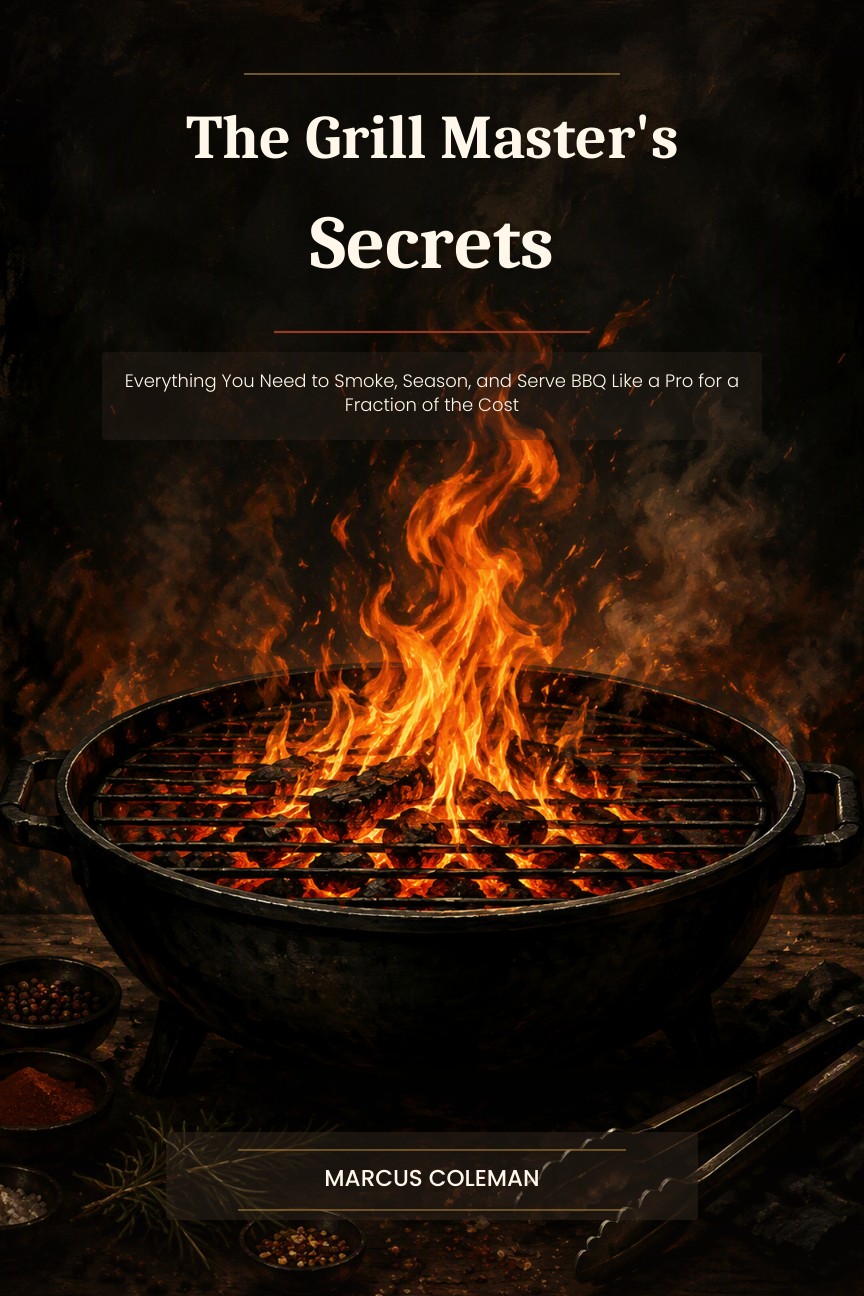
The Grill Master's Secrets — First Edition cover

I have been cooking over fire for fifty years. I started as a boy handing my father foil parcels in a back garden in south London, on a grill he had made himself out of a drum, in weather that no sensible person would have cooked in.

I have cooked for two people and I have cooked for two hundred. I have burned a great deal of meat learning what is in this book, and I would rather you did not have to burn the same amount to find it out.

Some of what follows has appeared on the channel. Most of it goes further than the videos do, because a video holds seven minutes and a fire takes six hours. A fair amount of it has never been on the channel at all.

I want to say plainly what this book is for. There is a whole industry built on the idea that good barbecue requires expensive equipment, branded rubs at four pounds a jar, and sauces that cost more than the meat. It does not. Nearly every bottle on that supermarket shelf is sugar, vinegar, tomato and salt, and you can make a better one in twenty minutes for a fraction of what they charge.

A person who understands why a shoulder needs six hours also understands why the shoulder is a quarter the price of the loin. Learn the fire and the savings follow. That is the whole argument of this book, and everything after that page is the working out.

So this book teaches the craft and it counts the cost, on the same page, because in my experience the two are the same subject. Where a method has a real cost, I give it. Where it fails, I say so. Where the thing that matters is food safety rather than taste, I say that too, and I say it more than once, because it is the only part of this craft where being casual has consequences worth worrying about.

Every chapter is built the same way, so you always know where you are in it. The trouble — what goes wrong, described the way it actually happens in a back garden on a Saturday, not in a competition tent. The method — walked through the way one person walks another through a job at their elbow. The numbers — prices, temperatures, weights and timings. The honest part — what the method does not do, and where the risk is real. And what it returns — the arithmetic, in plain terms: what you spent, what you would have spent, and the difference.

Get the Book — $27

Section II — The Difference

Nearly every failure happens before the food goes on

Friends are coming at two. At half past one the coals go on, the flames are dancing nicely, the food goes straight over them — and twenty minutes later somebody is standing there with a pair of tongs apologising. That is not bad luck and it is not bad meat.

The way most of us barbecue
  • Lighting the coals at half past one and cooking over the flames
  • £4.50 a jar for a branded rub with salt and sugar first on the label
  • A different bottle of sauce for every flavour you fancy
  • Buying loin, breast and steak because the cheap cuts look like hard work
  • Judging chicken by the colour of the juices and hoping
  • Twenty to forty jars in the cupboard, six of which get used
  • Buying for thirty when twenty are coming, and binning the rest
The method in this book
  • Chapter 5: two zones and a lid on — the whole method, in order
  • Chapter 12: the house rub, four minutes, about £1.20 a batch
  • Chapter 14: the house sauce, 600ml for about £1.05, and its four families
  • Chapter 20: the cheap cuts fire rewards, and Chapter 21's low-and-slow method
  • Chapter 27: 75°C away from the bone — not pink, not nearly, not probably
  • Chapter 9: the ten spices that build everything, about £9 for the year
  • Chapter 33: 250g of served meat a head — about £70 for twenty, £3.50 each
Section III — What's Inside

Forty-five chapters across eight parts, 148 pages

Read it in whatever order suits you. Pick the thing that annoys you most about your own cooking, do that chapter, and cook it twice — the second time is when it lands.

Front Matter — Start Here
  1. Before You Begin
  2. How To Use This Book
  3. Your First Weekend — three jobs, about two hours, under £15 between them
Part One — The Fire
  1. 1The Only Rule That Fixes Most Barbecue
  2. 2Charcoal, Gas, And What Each One Really Costs
  3. 3Lumpwood Or Briquettes, And What Not To Buy
  4. 4The Chimney Starter, And The End Of Firelighters
  5. 5Two Zones: The Whole Method
  6. 6The Vents Are The Dial
  7. 7Smoke: Chunks, Chips, And What Actually Flavours
  8. 8Cooking In British Weather
Part Two — The Ten Spices
  1. 9The Ten That Build Everything
  2. 10The Twenty You Were Sold And Do Not Need
  3. 11Buying Whole, Grinding Fresh, Paying A Fifth
  4. 12The House Rub And Its Five Children
  5. 13Jerk Seasoning From Scratch
Part Three — The Sauces
  1. 14The House Sauce, Costed Against The Bottle
  2. 15The Four Families
  3. 16Marinades, And How Long Is Long Enough
  4. 17Mops, Glazes, And When To Brush
  5. 18Bottling, Keeping, And Scaling For A Crowd
Part Four — The Meat
  1. 19Reading The Butcher's Counter
  2. 20The Cheap Cuts That Fire Rewards
  3. 21Low And Slow: The Whole Method
  4. 22The Stall, And What To Do About It
  5. 23Chicken, Done Properly
  6. 24Pork: Shoulder, Belly, And Ribs
  7. 25Beef And Lamb
  8. 26Fish, Prawns, And The Quick End Of The Fire
  9. 27Temperature, Resting, And The Probe Argument
Part Five — The Rest Of The Plate
  1. 28Rice And Peas, And Why It Anchors A Plate
  2. 29Slaws That Hold In The Heat
  3. 30Corn, Plantain, And The Grilled Vegetables
  4. 31Flatbreads, Festival, And Bread On The Fire
  5. 32Dips, Pickles, And The Day-Before List
Part Six — Running A Cookout
  1. 33The Arithmetic Of Feeding Twenty
  2. 34The Timeline, Backwards
  3. 35Holding Food Hot Without Ruining It
  4. 36Six Menus, Costed
  5. 37Leftovers, Safely And Well
Part Seven — The Money
  1. 38The Season Audit
  2. 39The Freezer Twelve
  3. 40Buying In Bulk And Portioning It
  4. 41Seasoning Every Pan You Own For Four Pounds
  5. 42Kit Worth Buying, Kit That Is A Con
Part Eight — The Off-Season
  1. 43Cooking Outside In October
  2. 44Winter Maintenance
  3. 45The Batch Weekend
Appendix — Five Reference Sheets
  1. AThe Ten-Spice Rack Card — print it, tape it inside the cupboard door
  2. BThe Cook Chart — every temperature and timing on one page
  3. CThe Cookout Costing Sheet
  4. DThe Freezer Twelve
  5. EEvery Rub And Sauce, with batch costs and keeping times

Get All 45 Chapters — $27

Instant download · Yours forever

Section IV — Reader Results

From the postbag

What readers write in after their first weekend with it.

★★★★★

“Did the three jobs on the Saturday. Emptied the spice cupboard, mixed the house rub, made the sauce. Six thighs on Sunday over two zones with the lid on and my wife asked where I'd bought them.”

Dave M.Croydon
★★★★★

“I have been putting food on flames for twenty years and apologising for it for twenty years. Chapter 5 sorted that out in an afternoon. The costing sheet for feeding a crowd is worth the money on its own.”

Ian T.Leeds
★★★★★

“What I like is that he tells you where it doesn't work. The homemade sauce doesn't taste like the bottle and he says so before you make it. Haven't bought a jar of rub since May.”

Cheryl A.Birmingham
Section V — About

Who is Marcus Coleman?

Marcus Coleman

Fifty years over fire. It started in a back garden in south London, handing my father foil parcels off a grill he had made himself out of an oil drum, in weather no sensible person would have cooked in. He never wrote any of it down. This book is partly my way of putting that right.

I am not a chef and I have never competed. What I know is the practical end of it: how to get a fire to sit where you want it for six hours, which cuts the fire rewards and which ones it punishes, and how much of what you are sold in the barbecue aisle you can simply make yourself for a fifth of the price.

I wrote this for everyone standing over a cold grill wondering where to start — and for everyone who has spent a summer's worth of money on jars and bottles without ever asking what was in them.

Marcus ColemanFirst Edition · 2026
Section VI — Order

The Grill Master's Secrets

The complete First Edition, delivered the moment you order.

The Grill Master's Secrets

  • The complete 148-page First Edition (PDF, instant download)
  • All 45 chapters across eight parts, fully illustrated
  • Your First Weekend — the three jobs to do before the next warm Saturday
  • The Ten-Spice Rack Card — print it for the cupboard door
  • The Cook Chart — every temperature and timing on one page
  • The Cookout Costing Sheet and the Freezer Twelve
  • Every Rub And Sauce, with batch costs and keeping times
  • Read on phone, tablet or computer — or print it at home
$47$27

Launch price · ends at midnight

Get Instant Access — $27

Instant download · Yours forever

Visa · Mastercard · Amex · PayPal · Apple Pay

Section VII — Questions

Before you order

Are the savings real?

They are the book's own arithmetic, shown line by line in Chapter 38, and I would rather set out what is behind them than wave the number at you. A typical ten-cookout season is costed there at about £663 against about £334 done the way this book teaches. Meat and sides are more than half of the difference; rubs and bottled sauce are a smaller part of it than people expect.

What the book will not do is promise you £330. That figure is one household cooking ten times for eight people at 2026 prices. Cook four times a year and the saving is a fraction of it. Cook thirty times and it is a good deal more. Prices vary by region and supplier, and they change.

Your videos are free — why buy the book?

Because a video holds seven minutes and a fire takes six hours. Most of what is in here goes further than the videos do, and a fair amount of it has never been on the channel at all.

The channel shows you one cook. The book gives you the method underneath it, plus the ten-spice rack, every rub and sauce with its batch cost, the cook chart, the costing sheet for feeding a crowd, and the whole off-season — in one place you can keep and print.

Why only $27?

Because the people who most need this book are the ones quietly losing a few hundred pounds a summer to jars and bottles, and I would rather they read it than admire the price of it. $47 is what a manual of this length ordinarily goes for. $27 is the launch price while the First Edition is new.

I have a gas barbecue, or a small kettle. Is this for me?

Mostly, yes. Chapter 2 costs charcoal against gas honestly and Chapter 5 sets up two zones on either. The spices, the rubs, the sauces, the sides, the cookout arithmetic and the whole of Part Seven apply whatever you cook on.

The one honest limit: the two-zone method needs a lid. A barbecue with no lid is the single piece of kit worth replacing ahead of everything else, and on anything under about fifty centimetres across, the cool side is never properly cool. The book says so where it matters rather than after you have bought it.

What format is it, and how do I get it?

A 148-page illustrated PDF. You get the download link the moment you order — no waiting for the post. Read it on a phone, a tablet or a computer, or print it at home. The Ten-Spice Rack Card and the Cook Chart are designed to be printed and kept where you cook.

Prices are in pounds and temperatures in Celsius. I am not in Britain.

The prices are British and current to 2026, and Chapter 8 is about cooking in British weather. The craft is not: fire, spice, sauce, cuts, timing and temperature travel anywhere. If you are elsewhere, read the money chapters as ratios rather than as your own shopping bill — the gap between making a thing and buying it holds up wherever you are.

Is it safe to follow?

Food safety is the one part of this craft where the book repeats itself on purpose. Chicken at 75°C measured away from the bone, at every stage and in every cut. Anything minced, 71 to 75°C. Cooked food held above 63°C or below 5°C, two hours on a table in ordinary weather and one in hot. Juices running clear is not a reliable test, and neither is colour near the bone.

It is general information for the home cook, not a substitute for official guidance — follow the current advice of your national food safety authority. And barbecues produce carbon monoxide: never use or cool one indoors, in a tent, a garage or any enclosed space.

Marcus Coleman Wait — one thing

Before you buy another jar

Less than one bag of charcoal and a jar of rub. The house rub in Chapter 12 takes four minutes and costs about £1.20 a batch — the branded jar beside it is £4.50 and mostly salt and sugar.

Get the Book — $27 or see what's inside →